Look. They all can’t be winners. Some places have to be in the middle. Its just the way it goes you know?
On the weekends I go for long rides through the SGV. Whenever I pass this place, in the morning, its packed. All the tables outside are full. But, these rides are not appropriate for having a brick of a burrito in your stomach, so I never stopped to see what was doing.
One day I needed to drop the kiddo off at school, so I decided to take a big detour and get burrito from this place. Even on a Thursday morning it had it’s crowd of regulars, promising. The dude taking orders was gruff, but cool.
This place has a more interesting style of cooking the eggs than most other places. They crack, and mix the eggs for each order, its not all in a pitcher of orange fluid. Its not totally mixed, so there’s still some white streaks. They pour it out to just the right size to fit the tortilla’s “core”. Little bit of crisp around the edge. great.
Now the potatoes, this is where the burrito falls flat. They we’re there, yes, but mostly as thin mush layer. Not much texture, flavor or seasoning, No crispy bits. Not even a hit of saltiness.
The tortilla itself was fine, nothing crazy, not flakey nor doughy, just a middle of the road tortilla, slightly toasted. There was bacon in it, like the tortilla, it was perfectly adequate. Some crisp with a smidge of chew. But otherwise run of the mill.
There was no salsa included, so I can’t weigh in much on that part. Dang, that really helps out, and lacking that is a big hit to flavor town.
Portion size was just right, not a belly buster, but your not really left for wanting when your done.
Overall it was not a bad burrito, but it also wasn’t one that stands out for any particular reason. Totally fine in every way, but not one that you would write home about, and I would not want to deal with a weekend crowd for it. But will say, I like the way they cook their eggs, that will be added to the ideal breakfast burrito.
Look, I’m a Sam Rockwell mark, especially when they let him just run with it. Michael Pena (even though we lost him to scientology) he’s still one of the few Mexicans on the big screen, so I gotta support. Gore Verbinski? check. A title that’s a vague reference to online video games. Sign me up.
Its well made, looks good, craftsmanship wise all is good. But, this movie wants to do a little too much for 90 minutes.
The TLDR: 12 monkeys meets Groundhog day and they learn that they both hate AI and cell phones.
For a while it touches on “phone bad”, cool, ya. Then it goes into “AI bad” ok, still here. It goes a little into “clones bad” territory, but that just turns into a thing about being force fed ads.
Along that path, there’s just so much left up in the air, unsaid, or just unconnected to anything. After a couple flashbacks, the movie sets on its path to get something done and things happened, then it eventually stumbles across the finish line. There’s characters that show up to be creepy, but just end up with zero pay off, no cool back story, just dudes doing what they are told.
The movie kind of touches on the “good luck have fun” part as a sort of game show audience chant thing, but there’s never any sort of tie in. Then I thought, oh maybe there will be some gamer twist, but that too was unfulfilled.
I figured it out the movies twist too soon and blurted out what I thought was going on, and I ended up being right. Boo, I’m a big dummy, if I’m figuring your shit out early, get back to the drawing board.
I figured out years ago that social media is bad, and hey, maybe don’t live with your phone in your hand all the time right? But I can’t help but feel that the people who this movie ‘targets’, for a lack of a better term, are just going to get turned off by having the mirror pointed at them in such a way, if they even have enough media literacy to see it.
over all, meh. Watch it on a plane, and forget you watched it later that day.
Or why I learned to read up on a radio before I buy it.
Luckily this is about cheap radios, and not mid/high-tier handhelds, like the Yaesu I continue to ask myself why I bought. I do a bit of HAM radio-ing (is that how you say it?). Radio stuff is fun, I’ve gone deep enough to get my ‘general’ license so I have access to all the bands so I can talk to people hundreds of miles away.
One of my favorite things is APRS, which is a form of packet radio that sends out a telemetry packet with GPS info at set intervals. I run it on bike rides, hikes and road trips. Other people tuned in can pick up those packets, and there are also some devices out that also log the contact to the internet. There’s some fun paths out there from days out, vacations, and trips to my favorite camping weekend.
Recently I really learned to love a good Baofeng. They had a bad rep for a while, but they’ve cleaned up their act, and now they set the benchmark for cheap-but-good radios. Can’t go wrong with UV-5R.
Their easy to program, their scan feature aligns with how my brain works – truth be told, they are the only one I understand.
But since they are cheap and easy to program you don’t die inside when something happens to it. No biggie, $20 and a couple days later and you have a new radio. In fact, I end up buying the two pack and usually end up giving the other one away.
So in my head, I’m thinking a UV-5R is almost the perfect little radio to carry around, if only it had APRS. I do a quick search and find the Baofeng BF-F8HP PRO, $60 bucks, it’s got GPS, great. let’s get it.
It arrives a couple days later (one of the few benefits of Southern California – everything is here so you get it fast). Its a chonky boy, but not a deal breaker, I flash it with my saved repeaters and other frequencies.
I start to go through the menu, not seeing anything about APRS, not worried though, different radios handle it differently. I found where to put my call sign in, a glimmer of hope. But nothing about APRS. Keep digging. Not finding anything on my own, I get on the internet and get the user manual. Search through it, no mention of APRS. Oh no, doubt sets in.
I do a deeper dive on the user manual, and find out all you can do with the GPS is send an APRS-like packet to a set of predefined contacts/radios on the same frequency. But you can’t tune into the default US APRS frequency and decode what’s coming in and your certainly not sending any packets out.
Fudge. this isn’t THE radio, and I’m out $60. Why would I carry this bigger thing that is just as good as a much smaller, lighter radio. Not going to return it though, will hold onto it in case it’s an alternate firmware that opens up APRS, or if I just need a radio for an experiment or project.
I’m convinced there’s another Baofeng out there that can handle APRS. I find the 5RH Pro, I confirm it has GPS and APRS support, its only $30? Its almost the same as the BF-F8HP, it has 1 extra button and a different knob. Cool, let’s go.
A couple days later it shows up. I’m excited. I charge it, and later that night I sit down, and plug in my info for APRS, and get things configured. I tune to the frequency, and almost immediately get some packets. I send out a couple, cool. great. This works. Lets plug it on the computer and get all my presets on there.
Get Chirp running, go to pull from the radio, and can’t find this radio in the menu. Go to the internet, see what others have found.
Sinking feeling. Turns out this radio is not compatible with Chirp, and does not look like anyone is going to be able to set it up. The company recommends another set of software that only works with a small sub set of their ‘pro’ radios. I’m not doing this. I had to do it to program my Yaesu. I’m not installing single radio specific software. No.
What a burn. I’m $90 in, and don’t have THAT Baofeng radio, I don’t think it exists right now, and I’m not going to just keep buying radios, I already have a bunch as-is.
Both of those radios are so close, the hardware is there, the body is willing. But the software mind says otherwise. I know I can use a cable and some external gear to open up that functionality, but I’m already the antenna weirdo out in public, I don’t need to be an antenna and wires weirdo out in public. I’ll hold onto them, put them away, and maybe use them to make some DIY repeater or something later on.
In the mean time, I have two daily radios that cover my needs:
VGC VR-N76 is a full featured radio, mid tier price, but can’t argue with its capability.
UV-5R small, solid and $16.
If anybody out there at Baofeng is listening, take the UV-5R Mini, remove the light, put a GPS antenna there and setup the firmware to handle APRS. You would have the new benchmark for a solid radio. Then we can start talking about putting KISSTNC in radios.
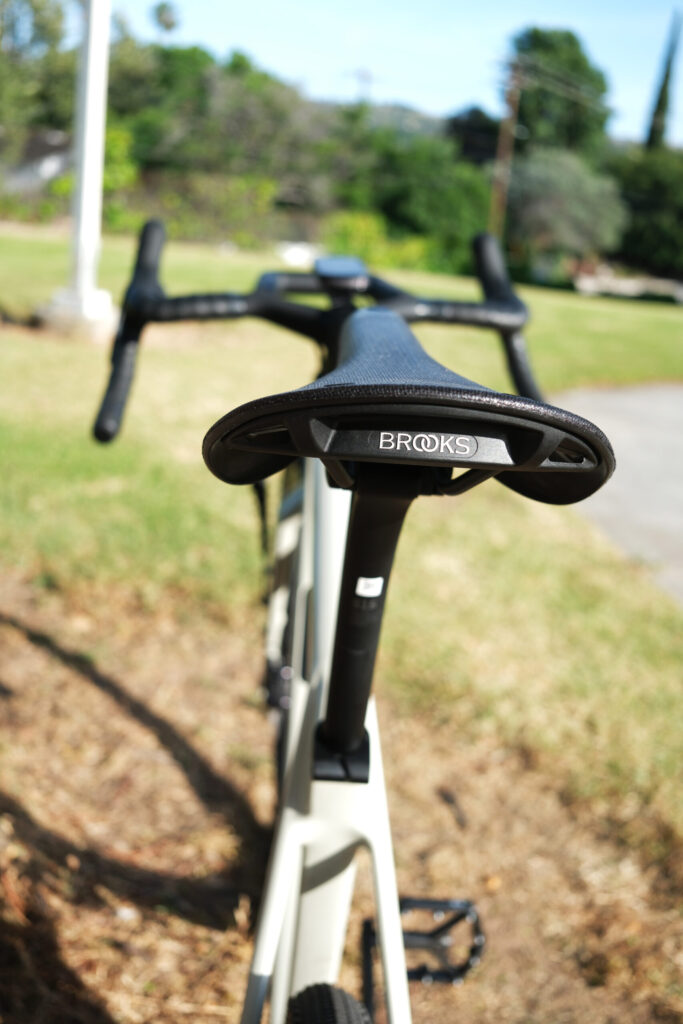
So far so good, saddle needs breaking in, but big tires nice, who would have thought. I like the gear ratios, but it on a whole is shifted down, with more climbing, and less speed. but I got a road bike for speed. This thing is joy to take into climbs.
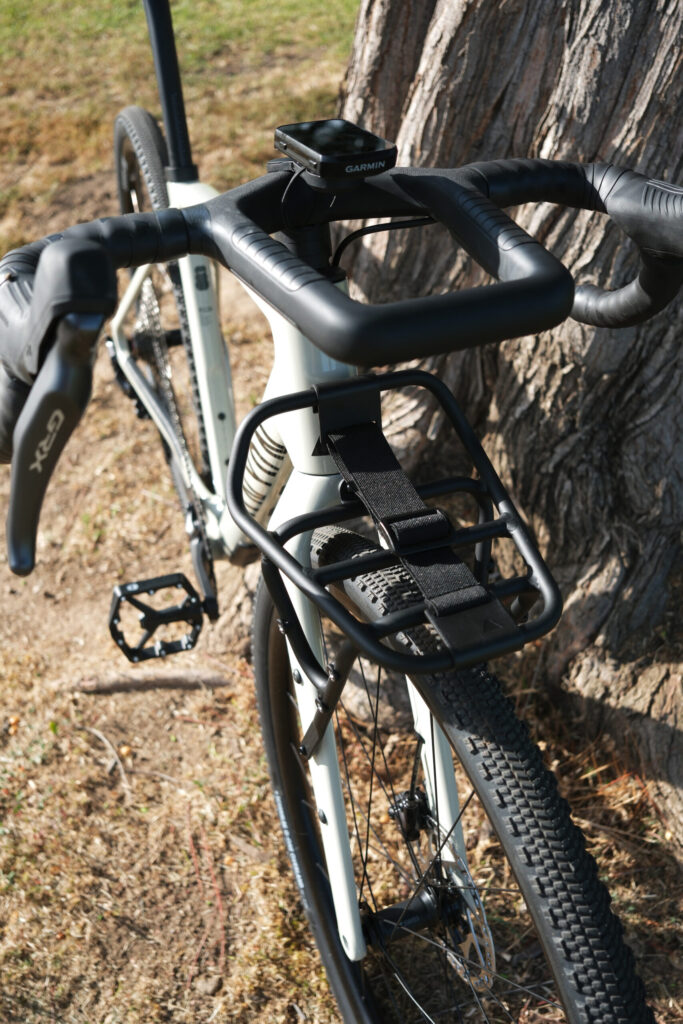
This year its a Canyon Grizl CF7 ESC, with the funky funky bars.
Pretty much stock for now. Only part that has been swapped out is the saddle, I was not into the stock one, squishy. Accessory wise, I added the Garmin mount that’s part of the steerer stack and the front rack.
Wow, tire size makes such a big difference, aside from my cargo bike, all my other bikes have either 23 or 28mm wide tires, and neither provide much cushion. The stock 40mm (I think) that come on this are not great (seem to drag at +16mph), but offer a nice ride.
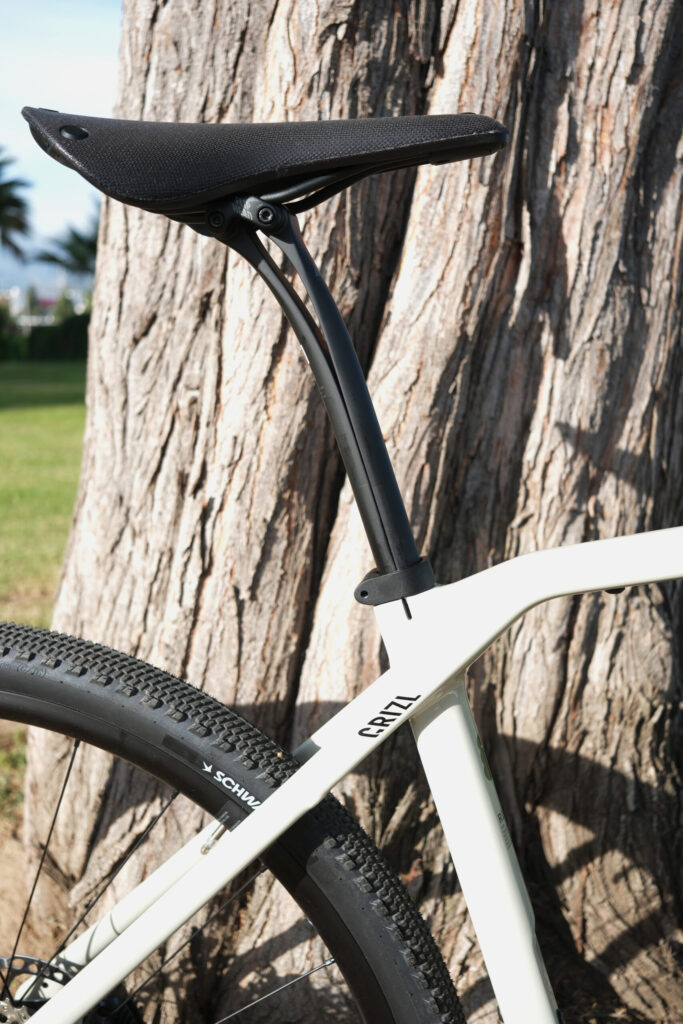
The split seat post is interesting, but not the best for angle adjustment, would be cool if that was decoupled, but that would just add more weight. maybe make the saddle mount similar to what Thompson does for theirs – 2 screws handle both the angle adjustment, and fastening down the saddle.
Super stoked to expand where I can go on a bike, I can take off from home, do some road riding, hit some gravel/dirt for a couple miles, then cruise back home on the streets. An all in one solution that does not require a car. There’s paths around here and some good alternate routes, excited to explore.
This is a review for the book not the movie. so, ya.
I didn’t go into this expecting much but a fun vacation read. Andy Weir books usually have some basis in real science, so they are not just pulp.
I’m not going to get into spoiler territory, but it’s another one of those single person stuck in space books, but with a single alien who is also stuck in space, so, two different entities stuck in space trying to solve the same problem.
Its ok, ups and downs, but you know they are coming once you settle into the rhythm of the book. Characters you followed through out the book just stop getting mentioned. Felt anti-climactic since they followed a realistic scientific process to find a solution to the problem.
I finished it just so I can move on, just in case it did something cool in the end. It didn’t.
On this morning it took me to Glendora so I can take my mom to a dentist appointment. It was early, I was hungry, and I couldn’t stray too far from the dentist office. I consulted the oracles, and they spoke of Angelo’s.
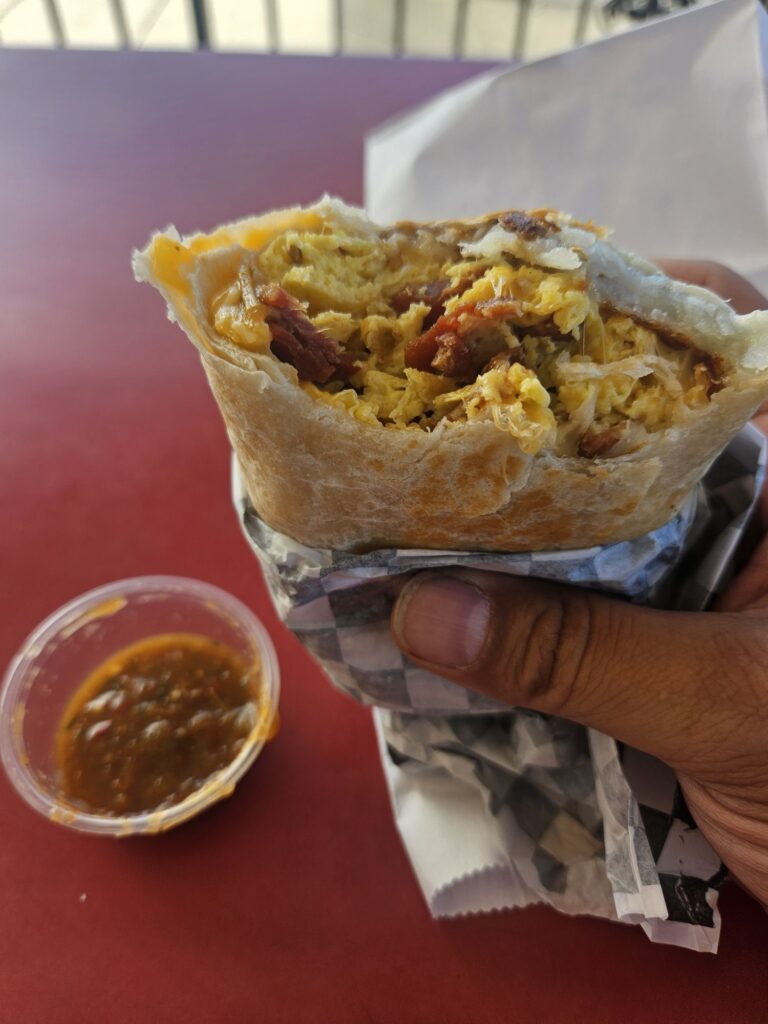
Overall, a good breakfast burrito. They nailed the just right amount of cheese, it had some stringiness in bites, but wasn’t a thick lump of cheese spanning the burrito either. Bacon was crispy, but not overcooked. They gave it a little toast when rolled, but not too much so that the tortilla was cracking.
On the egg front, they’re good, totally fine, but I feel a little too much. Conversely when it comes to the potatoes, it was hard to tell there was any. Mostly the mushy part, but not any of the crispy bits, and the crispy bits matter.
Size wise, this burrito was perfectly sized, just enough for me, but some big eaters might want a bit more. The salsa on the side was good, totally fine, a smidge of spice. Went well with the burrito.
In conclusion, they make a good breakfast burrito, would get one again if in the area, but probably wouldn’t seek it out if I was at home.
I got started with film cameras. My first “real” camera was a Canon AE-1 with a 50mm lens. Still have it. It was a manual affair, the only automatic feature it has is what gives it it’s name – Automatic Exposure. It was one of the first on the market with that feature when it came out, but I never used it much.
Digital came around, I ended up getting a Nikon D300, which was great, but hefty camera. Loved using it, no frills, no dumb features, just a solid workhorse, it took pictures, that’s it. After some time I got tired of lugging it around – I have climbed volcanoes with it strapped to my back, carried across multiple cities.
I started to dabble in compact cameras, mostly due to the timing – this was just before micro 4/3rd and mirror less cameras were around. I had a Sony, Canon, and Lumix. They all took decent pictures, but never really captured images the way I saw them. I had to do quite a bit of post to get colors and feel right. It was more than just getting the “hazy layer” out. But at the end of the day, those cameras never really scratched the manual itch. I found myself having to dive through menus to help get the image I wanted, but doing so would pull me away from what’s going on, and take so long the shot would be lost to time by the time I had the camera ready to go.
A few years went by, I found comfort in my phone camera and a camera app called Vignette, which let me dial in a faux-instant film look I liked and used that. But the hunger remained. I missed taking pictures.
I picked up a Sony a6100, my first mirrorless. It had some of the manual settings I liked at my fingertips, it took good pictures. It had a ton of features I never really took advantage of, I mostly kept it in aperture priority mode. This one was close, so close, but still felt odd, clumsy for me to really use.
I always had my eye on the Fujifilm cameras, but they were hard to get. You either had to be ready to buy when they went up for pre-sale or be around at the right time when stores would get re-stocked, and I was never able to get the stars to align.
Until this last November. We decided to go to Maui for our annual vacation and I thought it “Hey, lets see if I can get a Fuji for the trip”. What do you know, most of them were in stock, I had a wide selection to choose from, all a couple days away.
DISCLAIMER: I don’t care about megapixels and censor sizes, this is the wrong place for in depth technical discussion, that stuff is boring.
Interface
It feels great in the hand, with a little bit of heft. The downside to it – for people with larger hands – is it can be a little hard to hold, not enough grip points. I ended up getting a thumb grip that fits in the hot shoe, feels like a 35mm SLR advance lever, sits right over the small wheel on the right backside of the camera, under/behind the expose compensation wheel on top. With that small addition, it makes it feel way more secure when holding it with a single hand.
Its not a compact camera, your not putting this in your pocket. Its still smaller, and lighter than a DSLR that’s for sure. If using a strap you can still keep it on the DL by tucking in front/behind your arm, and its not sticking out or swinging around.
It comes with a real chunky rope strap, which is fine and all, but a little bulky for my tastes. I mostly use a simple Peak Design strap (it has great adjustability on the fly).
This camera seems to be more geared towards someone primarily shooting in manual. You can put aperture and shutter in auto mode, but that’s about as far as it goes with automatic modes. Its easy to throw into auto mode right before you hand it off to someone to take a picture.
In auto the pictures come out ok, you can massage them into what you like, but sometimes misses the mark on what you want to be the priority when it comes to exposure, and it tends try and get an even balance which results some lost detail or muddiness.
Auto focus has been fine, no big problems. There’s a few different options that allow you to use the focus style you are used to. I found I like to use the lock-on style box to choose what I’m focusing on, and then shift back into the composure I want to shoot.
In regards to shooting there’s some small details that I absolutely love. The exposure preview when the shutter button is at the half way point is great. In manual focus mode, you can enable a little round preview bit in the middle that’s magnified to help you dial in you focus – something that’s always been a weak point of mine.
Most of the knobs, buttons and wheels are customizable. I found a setup that allows me to dial in most settings I tend to change frequently, without needing to pull my eye away from the viewfinder. That’s a big deal for me, when it comes the kind of camera I like to use.
For the rest of the stuff that’s not on knobs, the “Q” menu covers everything else you would need to change in situ. A single screen with a grid of config info, you either user the d-pad nub or the touch screen to change one of them. It even shows in the viewfinder, but I’ve found that when I do use the “Q” menu, I’m usually not looking through the viewfinder at that point.
In regards to the rest of the configs, their menus are huge, but well organized, and easy to navigate. Its totally fine and gets the job done.
The one complaint I have about any of the physical controls is the on/off switch. Maybe it’s my unit, I don’t know, but, its hard to catch a read on whether or not the switch is where it should be. It doesn’t have much of a detent, or bias towards the side its tipped to. It doesn’t have that nice click of my Nikon’s on/off switch. You can easily have it in a halfway point, in which the camera will not be on, it doesn’t come on until the switch is completely at the end of the on side of travel. I find myself visually confirming the status after I use it, which, is a bummer. I never needed to do that with any other digital camera I’ve used regularly. I also checked a friends XV100 and that one had a nice tactile on/off switch.
Lastly, the Film mode wheel and screen sensor are a bad mix to have so close together. Because of where the wheel is, you tend to reach for it with your left hand, which then covers the sensor, which – depending on how you have it config’d, but it’s setup this way by default – will turn the screen off, and activate the viewport. You end up doing some odd reach over hand contortion.
Connectivity
The camera has both bluetooth and wifi on it. Their app is pretty ok. You can use it as a remote, with access to a some settings, or you can see what’s on the card and transfer photos to your phone. The remote is pretty good, they know why your using it, and give you way more exposure options than what the camera has available via dials. You can tap the preview to set the focus. Its fine, it works. The only downside is the low frame rate preview, its behind by a split second too, so you have to pause for a second when adjusting the cameras composure. Also, its can be wonky about connecting, it was rare, but every now and then, it took a couple tries to get it to connect to my phone.
Post Experience
This is one of the huge surprises I got with this camera. I’ve found that in post there’s a lot less ‘haze’ that I need to adjust out. There’s still a tiny bit of adjustment, but its usually pretty close as-is, the closest I’ve had with any digital camera I’ve used.
I still find myself bumping the contrast, but find I’m needing to use curves a lot less, because levels usually covers what I need. Color corrections are usually pretty minimal if any at all.
The film dial/recipes thing is fine, but to be honest, not for me. They each look fine, and sure, if I really tried I could find some use for them. But all of that is stuff I would rather apply in post, and not when taking the picture. For the most part I flip between the regular, vivid, and black and white modes.
Pros
Great UI
Great lens assortment
Solid build quality
Cons
Short Battery Life
Meh on/off switch
Fiddly sensor by film wheel
On the plus side, menus and customizable physical buttons make this a camera you can adjust to fit your need. I had no problems finding all sorts of lens for this camera. I found a crazy fish eye lens for super cheap, and even a lens that uses a plastic lens out of a disposable camera.
The camera looks good and feels good, which ends up getting noticed, with could be both good and bad. When handing it some one to get a shot of me and the group, they have commented on how nice the camera is. Its cool, but I’m not that crazy about it, I like to be a little more on the DL.
When it comes to the cons, the battery life is short, but isn’t that much of a problem. It’s a standard battery they use in other cameras, so you can easily get spares. But, since it charges over USB-C, who needs spare batteries? You can give it charge with anything you would charge your phone with.
One day in Maui, I forgot to charge the camera the night before, and the camera was dead when I went to use it the next morning at our first stop. I gave it a zap in car on our way to the next spot and that was enough to bring it back to life and start shooting again. But the batteries for are not expensive or hard to get if you just want to keep an extra in your bag, think I’m ok just using USB.
The Film wheel/sensor thing can be configured to not be a problem, but it’ll probably come at the cost of battery life. You can disable the sensor, but both the screen and the viewport will be on at all times. I like the switchover and lack of glow from the big screen when your looking through the viewport, so I’m just learning to live with it.
Over all I have been pleasantly surprised by this camera. The quality of shots, the feel and overall usability of it have been great, with a minimum of a learning curve.
It’s just a good camera, one that is capable of taking better pictures than I am able to take. But, at the end of the day, its a tool, and one that takes practice to use better. I am glad to have something so capable that can allow me to grow and improve. I really don’t need a lot of features, when it’s basic operation does everything I want.
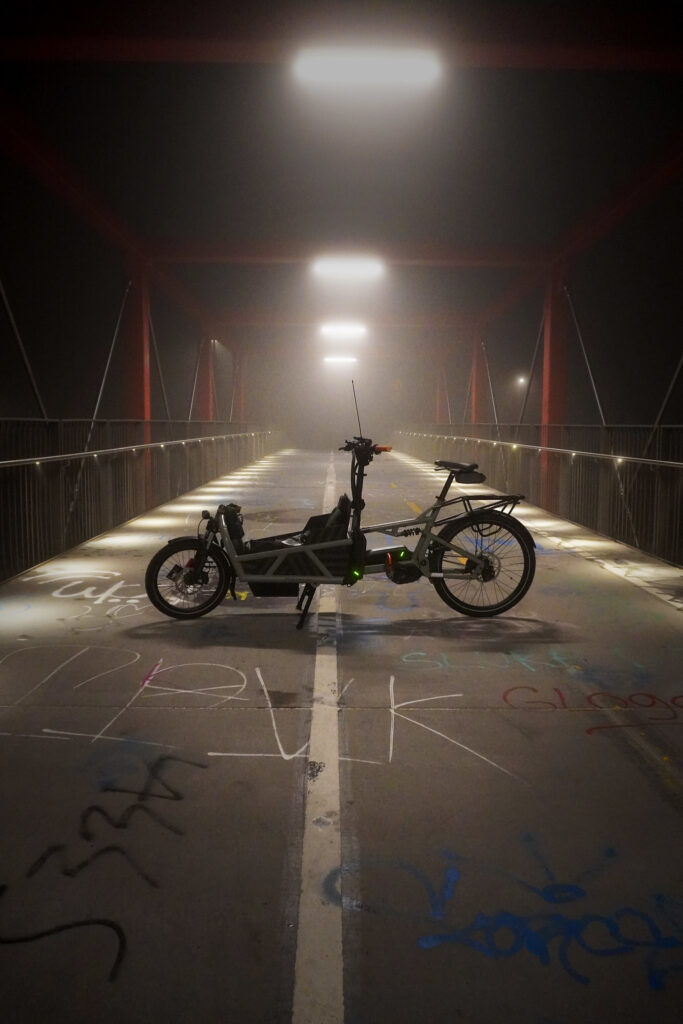
When I started to shop around for a cargo bike, I wanted to get an idea of what people were riding in areas like mine. I never see any cargo bikes, but there has to be some out there right? When I go to a Ciclavia or similar, they come out of the woodwork and I see a few, mostly long tails, but there are some front loaders around too.
I wanted to make sure it can be ridden, and not stuck with odd gear ratios or being too heavy to push up hills.
I’m an Edgar Wright mark, I’ve enjoyed pretty much every movie he has made. The Cornetto trilogy is a lot of fun. I had a smile all through Baby Driver, it’s like they went into my head for the soundtrack, then synchronized the movie to it. That sort of stuff makes me feel like what I imagine ASMR people feeling when someone whispers a pancake recipe or something.
So when I heard he was making a Running Man movie, I was stoked, sign me up.
Glenn Powell can be fun, let’s go.
Then the movie started.
As cliché as the story is, its very timely, and at the rate we are going, set in a not too distant future. Inflation is gnarly, medical care is crazy expensive, and the only way to get ahead is to put your life on the line for a TV show.
The main character never seems to act consistently, sometimes angry, sometimes goofy, but never in a predictable manner, just whatever would be more extreme for the given scene.
Without getting into spoiler territory though, things fall apart about 75% of the way through, its trudges along and feels like they tacked on a more specific ending after bad focus testing.
There’s a bad boss guy, but you never really find out much about them, and at the end, there’s a reveal that just falls flat because you don’t really know or care about the character.
👎👎
Think I’ll pass on this version of Running Man. I’m fine with the 1989 version. I didn’t want a retelling of the original, and was glad to see a different take on it. I’m glad they didn’t try a modern “Dynamo” or any of the bosses from the first movie. But after a point, the story just falls flat as you try and figure out how things got to that point.